

Skip to content

Team

Bizzi started with one question about one parking space.

Why should measuring whether a single space is occupied require a camera or cutting into pavement? Everything since has been the work of answering that, building the thing that answers it, and putting it outside where it has to hold up.

How it got here.

  1. First prototype

    A device that could tell whether one space was in use.

    The starting question was narrow: why should measuring a single parking space require a camera pointed at the street or a saw cut in the pavement? The first prototype was an attempt to answer that with a magnetometer and a radio.

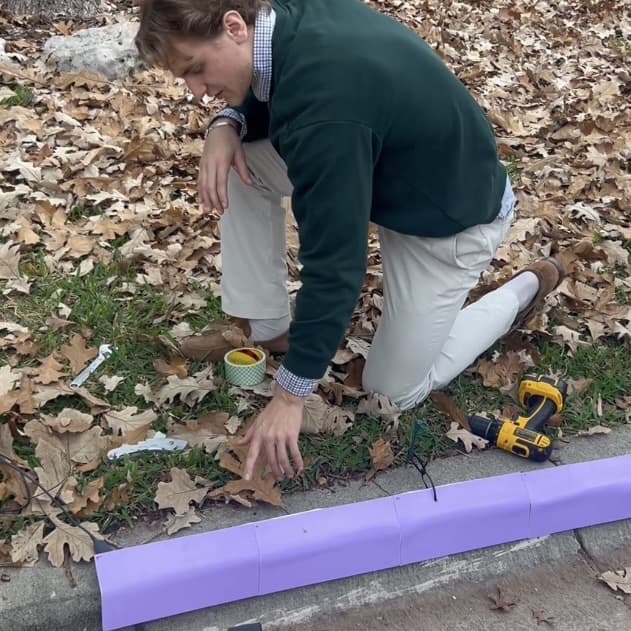
    Josh kneeling at a residential curb, fitting the first Bizzi prototype strip along the gutter line, with a drill and tape beside him.
    The first prototype going down on a curb.
  2. Product development

    From a prototype into something installable.

    The device became a sealed unit at 4.72 by 2.2 by 1.30 inches, in UV-stabilized polycarbonate with tamper-resistant screws. The head separates from a bonded backplate, so a unit can be swapped without redoing the mount.

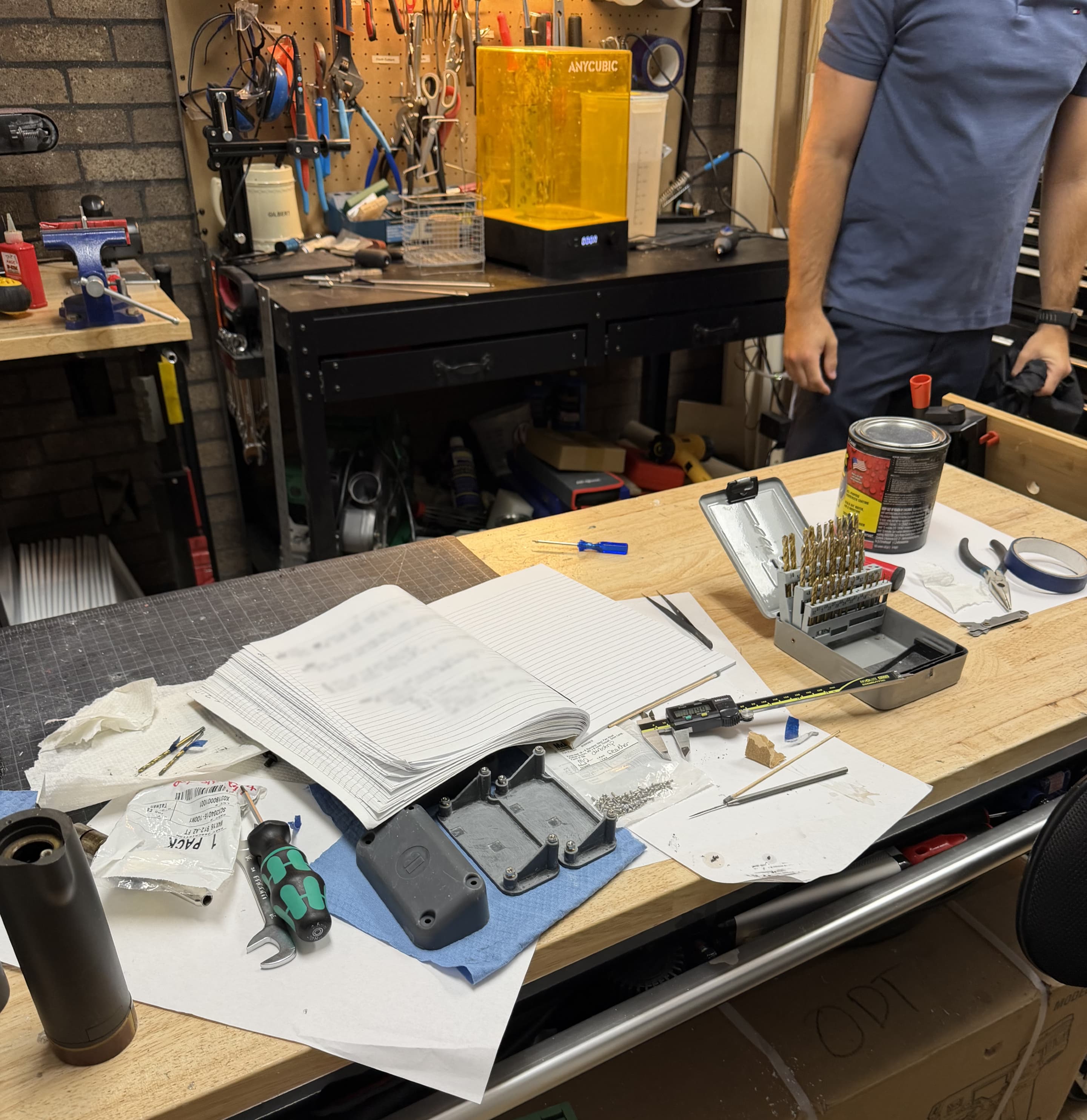
    Bizzi sensor housings, calipers, tools and an engineering notebook on a product-development workbench.
    Developing the current sensor housing.
  3. Field installation

    Three spaces in Austin.

    Sensors went onto regular, pickup and ADA spaces at a field site in Austin, Texas, with a receiver covering the group. That deployment has been running since September 2026.

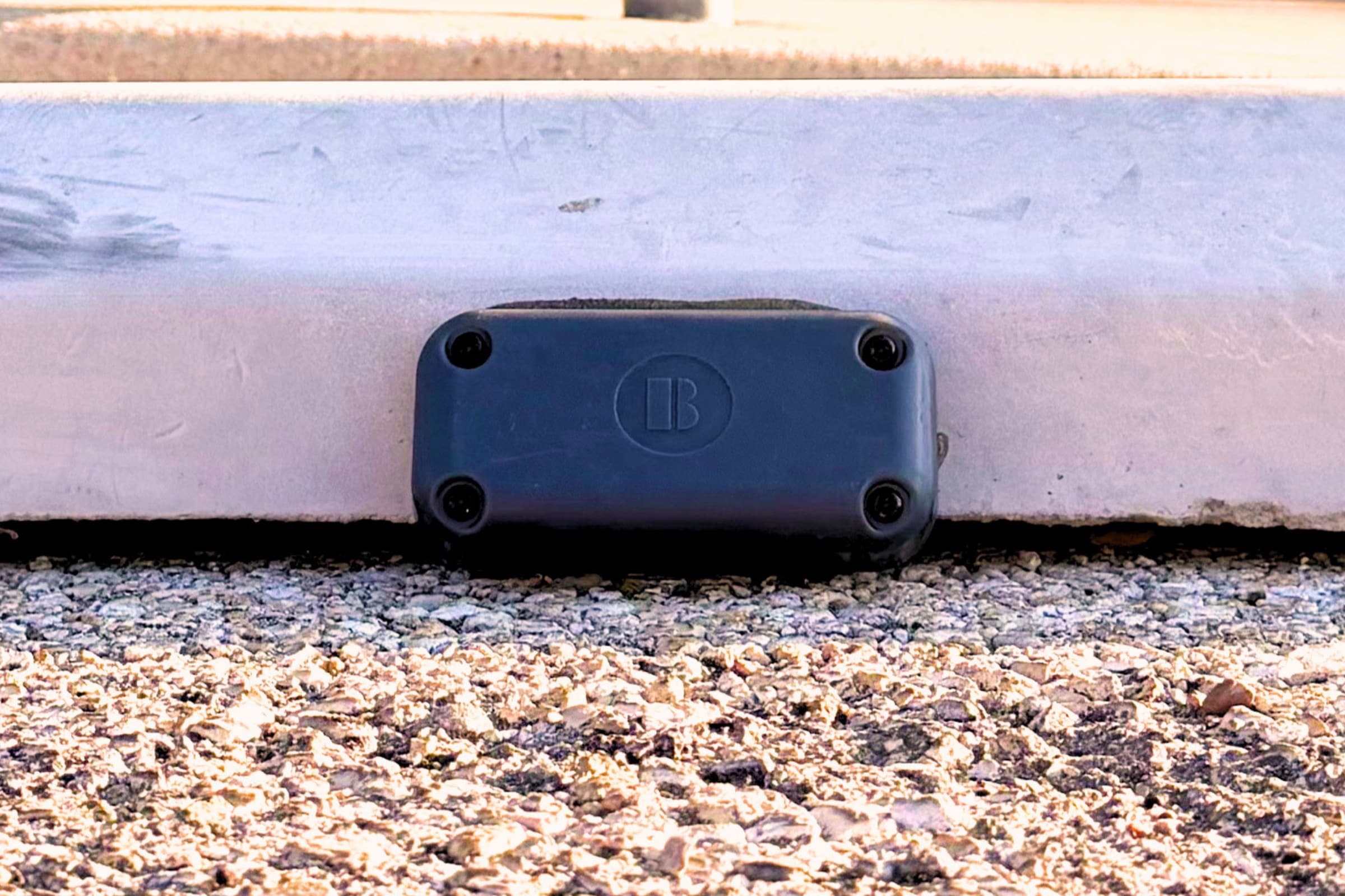
    A Bizzi PS Sensor bonded to the curb face of a monitored parking space, photographed at ground level.
    One of the three monitored spaces.
  4. Working platform

    The software the sensors feed.

    Every state change is stored with its own timestamp. Live status, occupancy rate, dwell, turnover, sensor health and period reporting all read off that record, and so does the accuracy check-in system used to validate it.

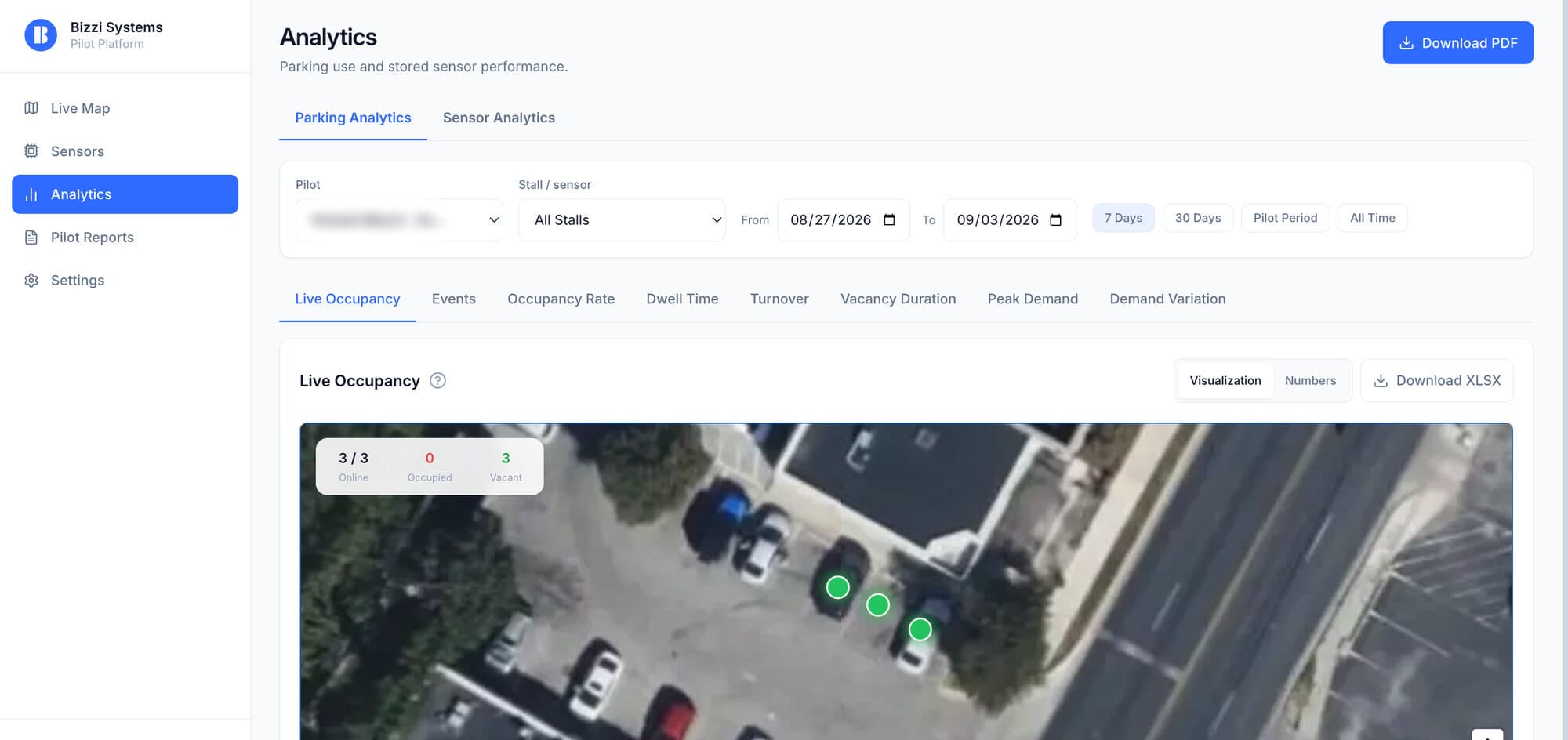
    The Bizzi analytics dashboard: parking and sensor tabs, a stall filter, and datasets for occupancy, dwell, turnover, vacancy and peak demand.
    The operator analytics view.

Who is doing the work.

Two founders, both full time, both on the deployment.

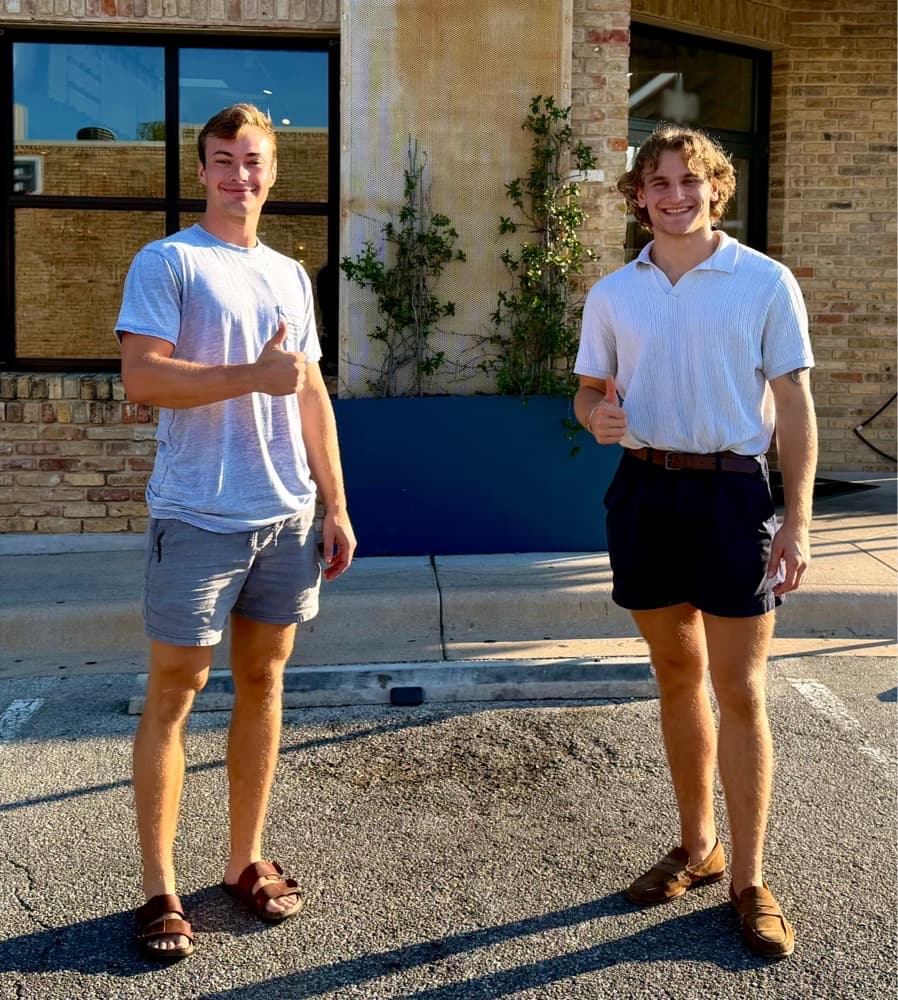
Michael Austinson and Josh Vreeland standing in the parking lot at the Austin field site, with the monitored curb behind them.
Michael and Josh at the field site. The monitored curb runs behind them, with one sensor at the curb edge between them.
Josh Vreeland, Founder & Chief Executive Officer at Bizzi Systems

Josh Vreeland

Founder & Chief Executive Officer

Josh hated parking so much he decided it’s what he should pursue. While studying economics at UT Austin, he built Bizzi’s first prototype and now serves as CEO.

Before Bizzi, Josh built and sold a software platform and played collegiate football.

Owns

Product, fundraising and pipeline.

Michael Austinson, Co-founder & Chief Operating Officer at Bizzi Systems

Michael Austinson

Co-founder & Chief Operating Officer

Before cofounding Bizzi, Michael served six years in the Marine Corps, including five stationed overseas. He then worked as a Business Development Associate, bringing expertise in day-to-day operations, business development, and product strategy.

At Bizzi, Michael focuses on driving growth, improving execution, and continuously enhancing Bizzi's product.

Owns

Manufacturing, supply, field deployment, operations and logistics.

Where the company stands.

Bizzi Systems, Inc. is a Delaware C-Corp based in Austin, founded in 2026. The company is pre-revenue. The sensor and the platform are built and running in the field. The commercial record begins with the deployments being scoped now.

Everything on the validation page comes off the deployment that is running today. Where a figure does not exist yet, the page says so.

1700 S Lamar Blvd, Suite 338
Austin, Texas 78704

Tell us what you need to measure.

If you run parking for a city or operations for a facility, the useful next conversation is about your spaces rather than ours.